 Easy Signs Inc.
The Easy Signs journal
Choosing a Retractable Banner Stand with Confidence
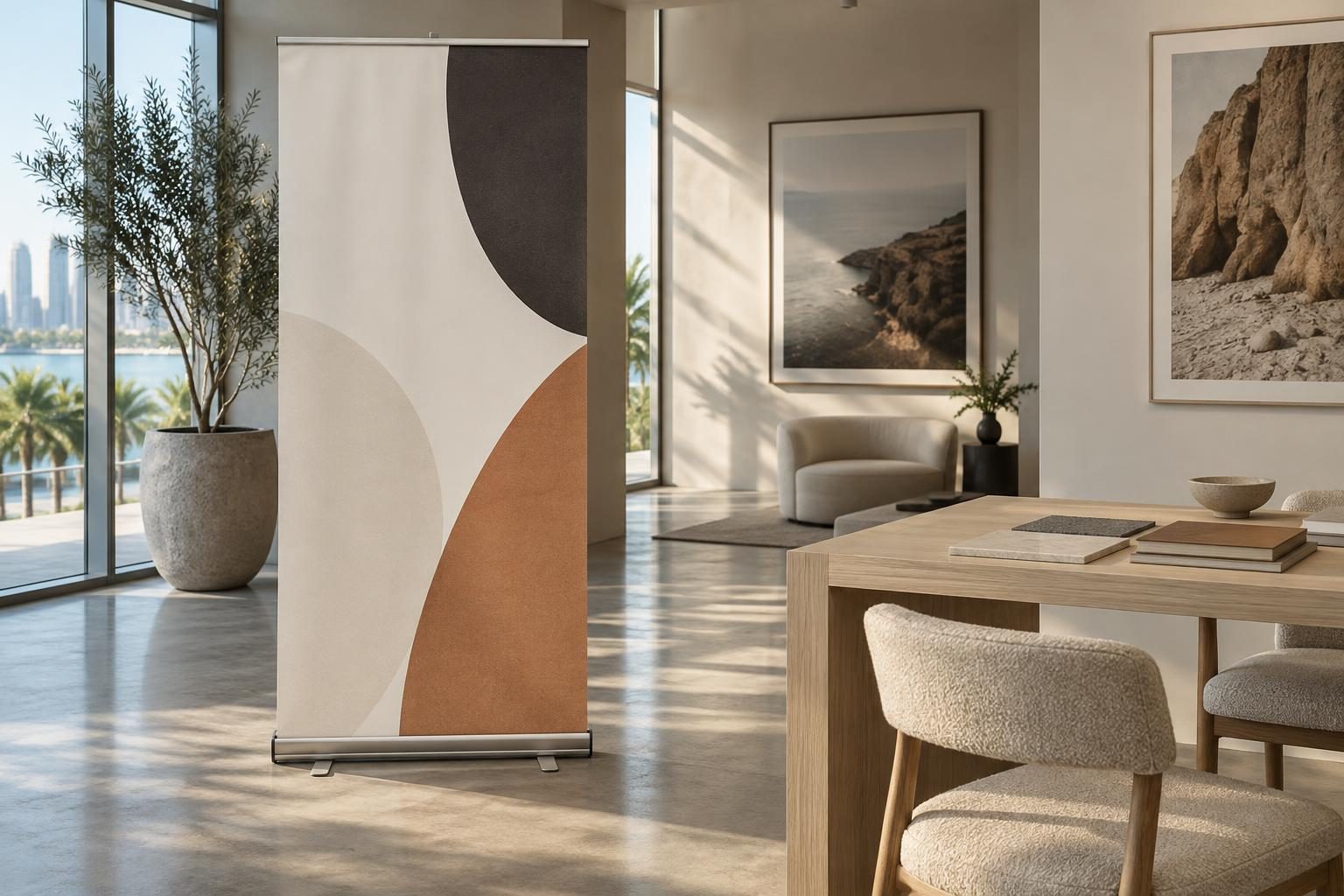
A well-chosen display should feel like a considered part of its surroundings, not an afterthought. Whether you are preparing for an exhibition, welcoming visitors to a reception area, or introducing a service, the right banner begins with a clear understanding of its role.
Choosing a retractable banner stand is therefore as much a question of proportion and communication as it is a purchasing decision. Before comparing options, consider where the display will live, what someone should notice first, and how it will fit into your routine.
At Easy Signs Inc., serving South Florida, the Retractable Banner Stand page is a useful starting point. This guide explains what to establish before making your selection—and which details are worth confirming directly.
Begin with the Setting, Not the Stand
Start by picturing the display in its intended location. A banner beside a reception desk has a different assignment from one marking an event entrance. The first may invite a closer look; the second may need to communicate while people are moving past.
Measure the available space rather than relying on a mental estimate. Consider the complete footprint, nearby furniture, doorways, and the route visitors will take. A display that looks beautifully proportioned in isolation can feel intrusive when placed beside a busy counter.
Viewing distance matters just as much. Ask where someone is likely to first notice the banner and whether they can comfortably pause to read it. That answer should influence both your format choice and the amount of information in the artwork.
For South Florida buyers planning a covered entrance, breezeway, or other exposed setting, describe those conditions before ordering. Do not assume that a particular stand is suitable for outdoor use. Ask about the intended environment and any placement limitations for the specific option under consideration.
Establish What You Are Actually Comparing
The product name alone is not a complete specification. Before choosing, separate the appearance you want from the practical details you need confirmed. Dimensions, what is included, and the relationship between the printed graphic and the hardware should all be clear before approval.
You can browse the retractable banner stands kept in stock at Easy Signs Inc. Use that selection as the basis for a conversation, rather than assuming that every size, finish, or configuration you have seen elsewhere is available.
A short checklist keeps the comparison focused:
- What are the displayed dimensions and full base footprint?
- What hardware, printed components, and accessories are included?
- What setup, transport, and storage instructions apply?
- Can the graphic be replaced, and what would that involve?
These are questions to ask, not features to presume. They are especially useful when comparing quotations that may describe their contents differently.
If several options are available, judge them against the same brief. A choice that suits a permanent reception position may not be the choice you would make for repeated travel. Let the intended use establish your priorities before appearance settles the decision.
Give the Artwork a Clear Hierarchy
An elegant banner does not need to say everything. It needs to make the right information easy to find. Begin with one principal message, then decide what supporting detail genuinely helps a viewer understand it.
A useful starting structure is a clear identity, a concise statement, and a simple next step. Depending on the purpose, that next step might be an invitation to speak with your team, visit a website, or discover a particular service. Avoid giving several competing actions equal prominence.
Consider the artwork at its intended scale. A composition that feels spacious on a laptop can become unexpectedly dense when additional contact details, photographs, and explanatory copy are introduced. Review the hierarchy from a distance as well as close up.
Photography deserves the same restraint. One purposeful image can establish a mood more coherently than a collection of unrelated visuals. Choose imagery that supports the message, and ask whether the source file is appropriate for the proposed print dimensions.
Before preparing final files, request the artwork requirements for your selected option. Confirm the template, visible area, margins, and any portion of the design that should remain free of essential content. Do not guess at these boundaries.
Consider the Whole Display and Its Routine
Think beyond the moment the banner is first installed. Who will move it? Where will it be stored? Will the same person handle setup each time, or will responsibility pass between colleagues?
If frequent movement is part of the plan, ask about packed dimensions, weight, and the recommended method of transport. If the display will remain in one location, focus on its relationship to furniture, lighting, and surrounding signs. Neither scenario automatically calls for a particular model; each simply creates a more useful buying brief.
It is also worth considering whether a stand is the right format for the assignment. If your plan calls for a graphic mounted in another way, explore Banner Printing and discuss the intended installation before deciding. Begin with the location and purpose rather than forcing the project into a predetermined format.
For a coordinated presentation, let each visual element do a distinct job. A nearby poster, framed image, or existing wall sign need not repeat every word on the banner. Consistent colors and imagery can create continuity without unnecessary duplication.
Make the Final Decision with a Complete Brief
A productive inquiry brings together the practical and creative sides of the project. Share the intended location, approximate available space, purpose, expected frequency of use, and any artwork you already have. If you have an event date, include it and ask what is feasible before making commitments.
Request a quotation that makes the scope clear. Confirm the selected option, dimensions, included components, artwork responsibilities, and any unresolved details. This allows you to evaluate the proposal on what it actually contains, rather than on an assumption about what the product name includes.
The best choice is the one that fits the setting, presents the message with clarity, and has specifications you understand.
Visit the Easy Signs Inc. showroom at 4860 N. Dixie Hwy, Oakland Park, FL 33334, to discuss your project. Call (954) 495-4344, email support@easysignsinc.com, or contact us to begin.
Keep your ideas growing
More from the journal.

November 4, 2026
Giclee Printing: What Makes a Fine Art Print Archival
What makes a giclee print archival: pigment inks, colour depth and fine art papers, explained by Easy Signs Inc. in Oakland Park, Florida.
Read story
November 4, 2026
Custom Wall Art: Choosing a Material That Suits Your Room
Canvas, acrylic, aluminum, wood or paper: how to choose custom wall art that suits your room, your light and the way you live.
Read story
November 3, 2026
Custom Picture Framing: How to Frame a Print Properly
Mat, glazing, backing and hanging: what actually goes into custom picture framing, and how to get a print framed to last.
Read story