 Easy Signs Inc.
The Easy Signs journal
Choosing Outdoor Signs: A Considered Guide for Your Business
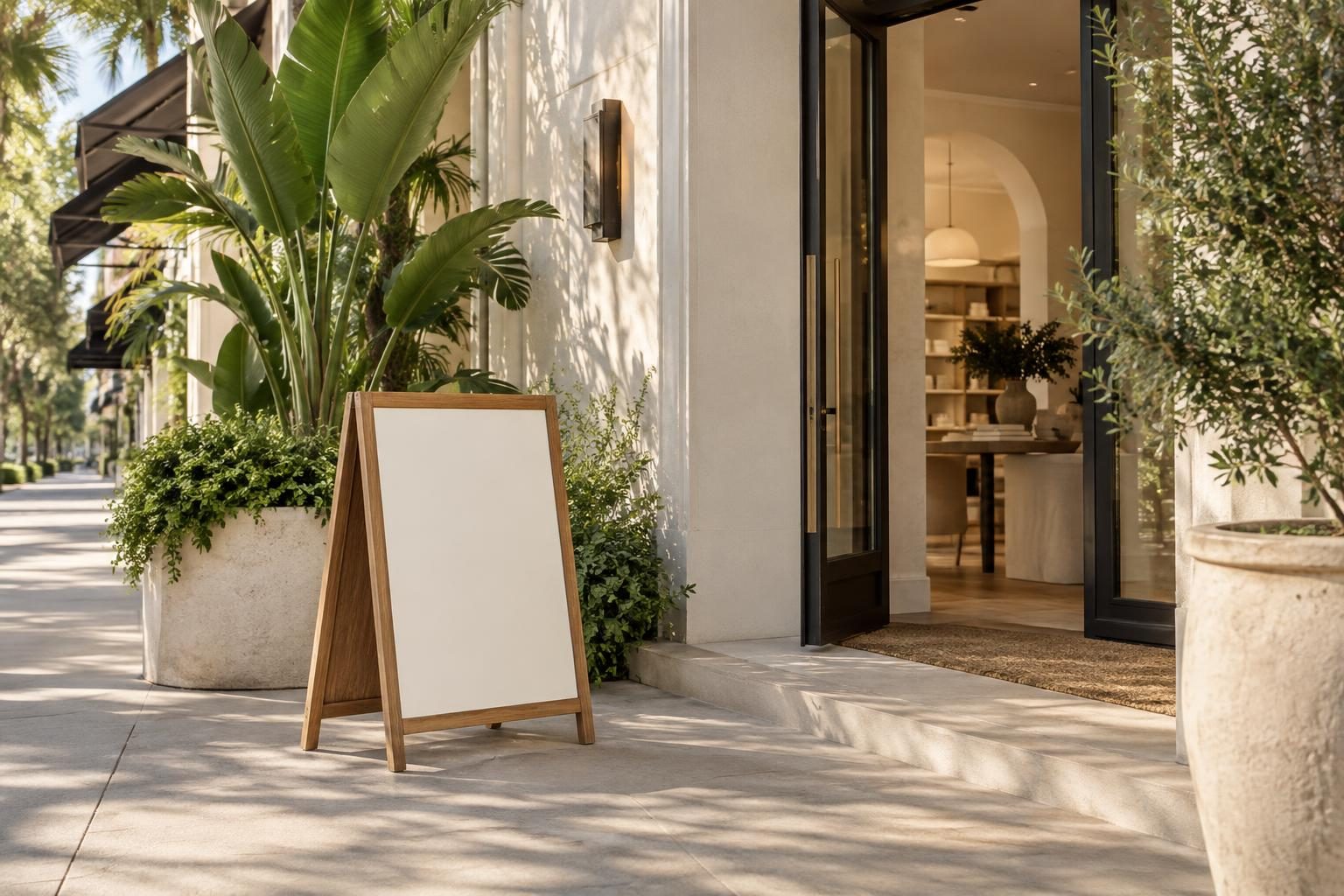
An outdoor sign is often the first introduction to your business. Before someone steps inside, it offers a glimpse of what awaits: a daily special, a new collection, an event worth noticing. The most effective choice is not necessarily the largest or most elaborate. It is the one that brings the right message into view at the right moment.
For South Florida business owners, choosing between sidewalk signs, A-frames, and outdoor banners begins with a few practical distinctions. At Easy Signs Inc., the conversation starts with what you want people to notice—and what you hope they will do next.
Begin With the Decision You Want to Inspire
Before considering a format, identify the sign’s primary purpose. Are you inviting pedestrians into a shop, introducing a promotion, or drawing attention to a temporary event? Each objective suggests a different relationship between the message, the viewer, and the location.
A restaurant promoting a daily special needs to communicate an immediate reason to stop. A retailer announcing new arrivals may want to create curiosity. An event promotion needs enough visibility to establish what is happening without asking a passerby to read a full invitation.
Try reducing the assignment to one sentence: “This sign should encourage nearby pedestrians to come inside for our current offer.” That simple statement becomes a useful filter for every subsequent decision.
Explore outdoor signs with that purpose in mind rather than choosing a format on appearance alone. A beautifully composed sign still needs a clear job. When the goal is specific, it becomes easier to decide what information belongs on the display and what can be left for the conversation inside.
Match the Format to the Occasion
Sidewalk signs, A-frames, and custom outdoor banners each offer a useful starting point. Their roles can overlap, so think of these categories as practical directions rather than rigid boundaries.
- Sidewalk signs: A natural choice for daily specials, promotions, and event announcements.
- A-frames: A lightweight, portable option for businesses that value flexible placement.
- Custom outdoor banners: A strong candidate for temporary promotions or events that call for visibility from a distance.
For a storefront message intended to reach people already walking nearby, a sidewalk sign keeps the emphasis on that immediate encounter. It can present a focused invitation without trying to tell the entire story of the business.
If portability is central to your plans, consider an A-frame. Think through where you intend to place it and how it fits into your daily routine. Ask about the specific option under consideration rather than assuming every frame has the same features.
When the brief calls for a temporary announcement with greater viewing distance, explore banner printing. The distinction is not simply one of size: it is about whether your message needs to support a close-range storefront encounter or announce an occasion farther away.
Let the Location Shape the Choice
A sign should be selected for its intended setting, not in isolation. Before ordering, stand where you expect it to go and observe the approach. Notice where pedestrians naturally look, what competes for their attention, and whether the entrance is immediately apparent.
Consider the viewing situation honestly. A message aimed at people on foot can be approached differently from one intended to attract passing vehicle traffic. In either case, avoid relying on small details to carry the main point. The essential offer should be easy to identify without a prolonged look.
Placement near a storefront or another high-traffic area can help bring the message into view, but visibility is only one consideration. Confirm applicable property requirements and local placement rules before committing to a location. Keep access and pedestrian movement central to your planning.
For an outdoor purchase, also ask which proposed option is appropriate for your particular exposure and installation needs. Do not assume that every sign suits every setting. Discuss the intended location, how the sign will be used, and any placement concerns before making a final selection.
Edit the Message Until It Feels Effortless
Outdoor signage benefits from restraint. A business name, a clear offer, and a concise invitation often provide a stronger starting point than a dense collection of services, contact details, and competing announcements.
Begin with the information someone must understand first. If the sign promotes a daily special, let that special lead. If it announces an event, give the occasion priority. Your business name and logo should remain prominent enough to connect the message with your brand.
High-contrast colors and clear fonts help establish a direct visual hierarchy. Bold design need not feel loud; it can come from a disciplined composition, generous spacing, and one decisive focal point. Avoid choosing a delicate type style merely because it looks elegant at close range.
Review the proposed artwork at a scale that approximates the intended viewing experience. Can you identify the main message quickly? Does anything compete with it unnecessarily?
If you are coordinating several storefront elements, consider your outdoor display alongside your broader retail store signs. Aim for a recognizable visual language rather than asking each piece to introduce a different personality.
Choose for Everyday Use, Not Just the First Impression
Budget matters, but a thoughtful comparison goes beyond the initial purchase. Outdoor frames and sidewalk signs offer visibility without pay-per-click charges or advertising subscriptions. Their appeal lies in giving a focused message a physical presence near potential customers.
Before deciding, explain how often your promotion changes and ask how the proposed sign accommodates those changes. Clarify what is included, what setup involves, and what care or storage the specific option requires. These questions help distinguish an attractive concept from a practical everyday choice.
After placement, pay attention to the response. Ask visitors how they noticed your offer and observe whether the message prompts useful conversations. Treat the sign as part of your marketing, not as a promise of a particular sales result.
Easy Signs Inc. serves South Florida with fine-art printing, custom framing, and signage. Visit our showroom at 4860 N. Dixie Hwy, Oakland Park, FL 33334, or contact us to discuss your outdoor sign. Call (954) 495-4344 or email support@easysignsinc.com.
Keep your ideas growing
More from the journal.

November 4, 2026
Giclee Printing: What Makes a Fine Art Print Archival
What makes a giclee print archival: pigment inks, colour depth and fine art papers, explained by Easy Signs Inc. in Oakland Park, Florida.
Read story
November 4, 2026
Custom Wall Art: Choosing a Material That Suits Your Room
Canvas, acrylic, aluminum, wood or paper: how to choose custom wall art that suits your room, your light and the way you live.
Read story
November 3, 2026
Custom Picture Framing: How to Frame a Print Properly
Mat, glazing, backing and hanging: what actually goes into custom picture framing, and how to get a print framed to last.
Read story