 Easy Signs Inc.
The Easy Signs journal
Choosing Perforated Window Films: A Considered Buyer’s Guide
Begin with What the Window Should Do
A window is both an opening and a first impression. It brings daylight into a room, frames the experience of arriving, and offers valuable space for a business to express its identity. Choosing what goes on that glass deserves the same care as choosing the furnishings behind it.
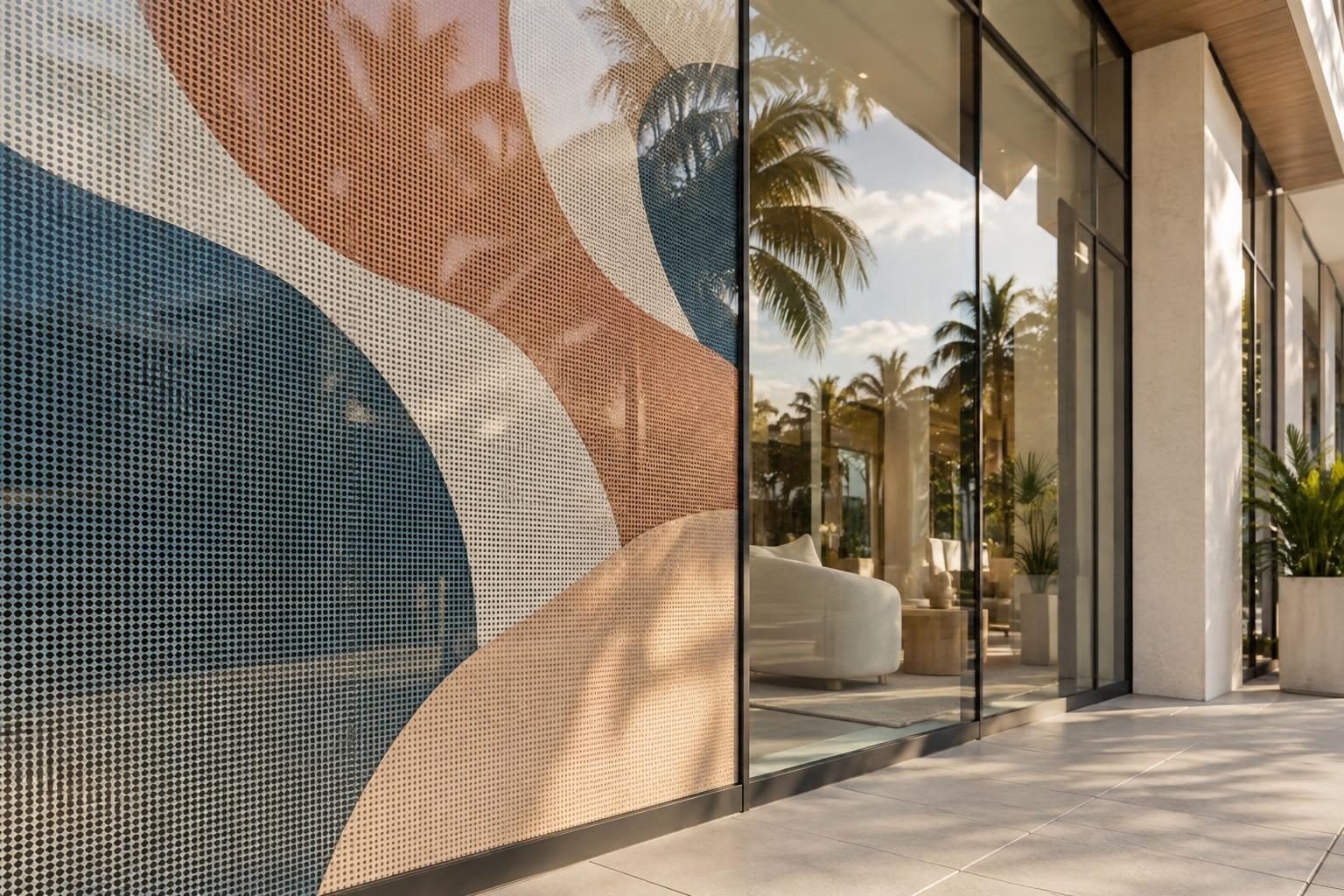
For South Florida businesses and homeowners, perforated window films offer a way to bring privacy, natural light, and visual character into the same decision. Their tiny holes allow visibility from one side while the printed surface restricts the view from the other. The result combines a functional window treatment with a customizable graphic surface.
The right choice begins not with a favorite image, but with a clear priority. Is the window meant to make a storefront more recognizable? Give a workspace greater privacy? Carry a company message on a vehicle? Each purpose calls for a different design conversation.
Before considering artwork, establish a concise brief:
- The primary goal: privacy, branding, or both.
- The location: storefront, office, home, or company vehicle.
- The intended application: interior or exterior.
- The message or atmosphere the finished window should convey.
This small exercise keeps the selection focused on what matters rather than on decoration alone.
Evaluate Privacy Alongside Light and Visibility
Perforated film is appealing because privacy need not mean abandoning daylight. Its perforations admit natural light, while the graphic-facing surface helps conceal the interior. For a meeting room, retail window, or residential space, that combination can be central to the buying decision.
Be precise about what privacy means for your project. A business may want to obscure a workspace behind an outward-facing brand graphic. A homeowner may be more concerned with preserving a sense of retreat. Those goals share a material category, but they should not automatically share the same visual treatment.
The product information specifically highlights daytime privacy. If your space is occupied after dark, discuss that requirement rather than assuming the daytime description answers every privacy concern. Bring photographs of the window and explain how the room is used throughout the day and evening. Ask the team to address the conditions relevant to your setting.
Also consider the experience from indoors. Which views matter most? Where do people sit or work? What should remain visually connected to the outdoors? These questions help make privacy a deliberate part of the project rather than an expectation left undefined.
Choose Artwork That Serves the Setting
For commercial applications, the printed face of the film turns glass into a branding surface. Easy Signs Inc. offers customizable, vibrant, full-color printing, allowing logos, promotions, and other messages to become part of the window design.
The strongest creative direction is not necessarily the busiest. Start with one principal idea: the business identity, a featured offering, or a distinctive visual mood. Then consider how much supporting information is truly necessary. A window should feel composed, not crowded with competing instructions.
Think about how the audience encounters the glass. A pedestrian approaching an entrance has a different viewing experience from someone passing a company vehicle. Ask the design team to consider that context when discussing the scale of imagery and the hierarchy of any wording. Treat the window as a specific surface, not simply as a larger version of a brochure.
For a storefront, coordinate the film with existing retail store signs. Colors, imagery, and messaging should feel related without requiring every surface to repeat the same composition. Consistency is most persuasive when it looks intentional.
In offices and homes, begin with the atmosphere you want to preserve. A restrained graphic direction may suit a quiet interior, while a more expressive composition may support a business with a bold identity. The appropriate choice is the one that belongs to the space.
Match the Application to Practical Priorities
Perforated window films are described for interior and exterior applications, with uses that include retail stores, offices, homes, and company vehicles. That range makes it especially important to identify the intended setting before choosing the final treatment.
Explain where the film will be used and ask which proposed material and application approach suit that project. Easy Signs Inc. describes its films as durable and weather-resistant, but those qualities should begin a practical conversation, not replace one. Ask what care the recommended film requires and what expectations are appropriate for your particular installation.
Comfort may also influence your choice. The films reduce glare and block UV rays, contributing to a more comfortable interior while helping protect furniture and merchandise from sun damage. If these benefits are priorities, say so early. They deserve consideration alongside the appearance of the printed graphic.
Keep security expectations equally focused. Obscuring the view into a property can add a measure of privacy and deterrence. The supplied product information describes that visual benefit; it does not describe forced-entry resistance. Evaluate the film for what it is intended to contribute.
For a company vehicle, discuss the intended windows and advertising objective directly with the team rather than treating the project as interchangeable with a storefront.
Make the Final Choice a Guided One
A well-prepared consultation brings the practical and aesthetic decisions together. Share photographs, approximate window dimensions, available artwork, and a plain-language description of what success would look like. Identify any priorities that should not be lost as the design develops.
Then ask the team to explain the proposed choice in relation to that brief. How does the artwork support the purpose of the window? What should you understand about privacy and visibility? What preparation, installation guidance, and care information will you need? Easy Signs Inc. offers expert support from design through installation, giving these questions a natural place in the process.
As a fine-art printing, custom framing, and sign shop serving South Florida, Easy Signs Inc. can also be a useful setting for considering the window within a broader visual scheme. Explore the portfolio as a starting point for discussing your aesthetic direction.
Visit the Oakland Park showroom at 4860 N. Dixie Hwy, Oakland Park, FL 33334, or contact us to discuss your project. Call (954) 495-4344 or email support@easysignsinc.com.
Keep your ideas growing
More from the journal.

November 4, 2026
Giclee Printing: What Makes a Fine Art Print Archival
What makes a giclee print archival: pigment inks, colour depth and fine art papers, explained by Easy Signs Inc. in Oakland Park, Florida.
Read story
November 4, 2026
Custom Wall Art: Choosing a Material That Suits Your Room
Canvas, acrylic, aluminum, wood or paper: how to choose custom wall art that suits your room, your light and the way you live.
Read story
November 3, 2026
Custom Picture Framing: How to Frame a Print Properly
Mat, glazing, backing and hanging: what actually goes into custom picture framing, and how to get a print framed to last.
Read story