 Easy Signs Inc.
The Easy Signs journal
Framing a Beautiful Home: The Details That Shape a Room
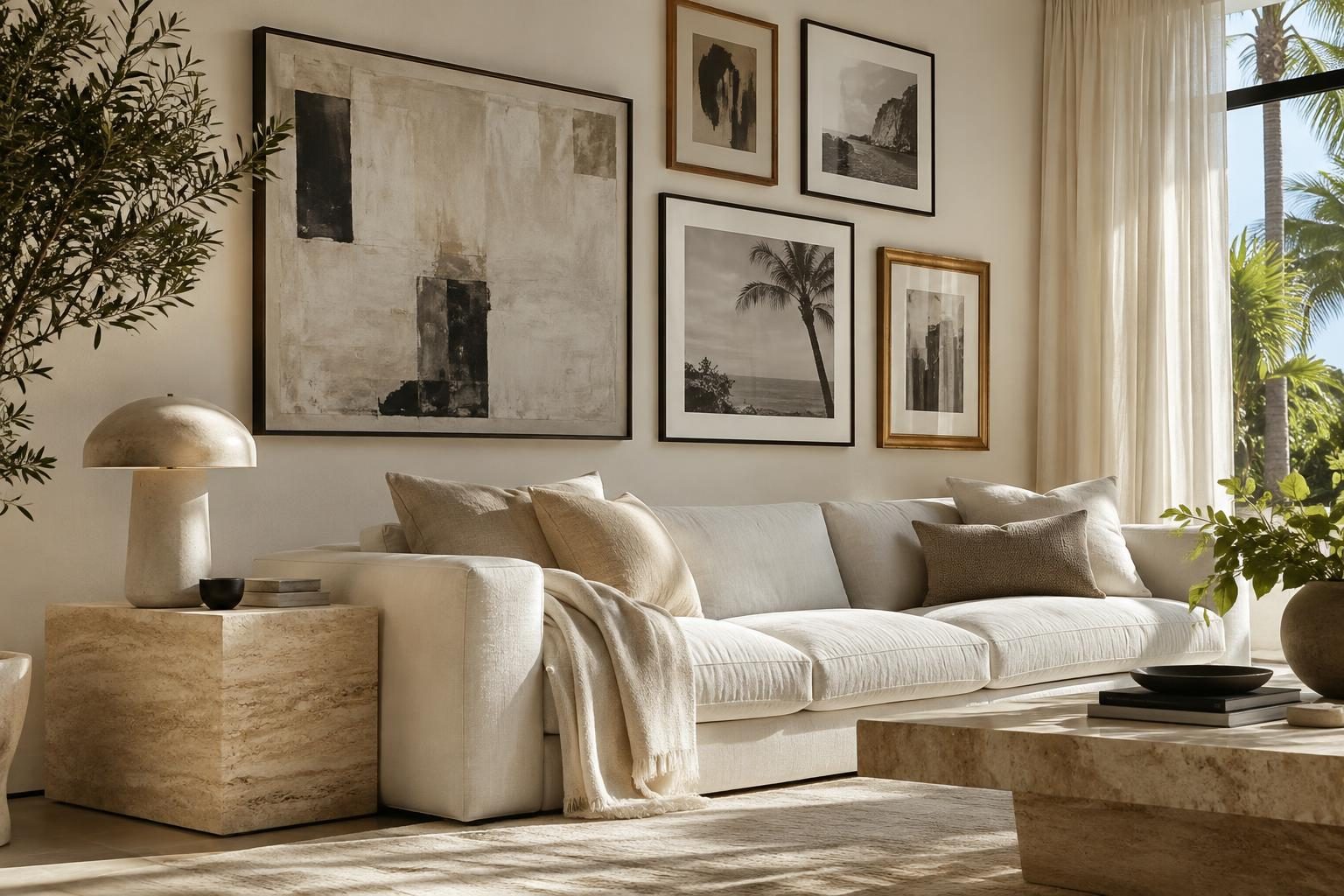
The Frame as Part of the Room
A beautiful interior is rarely defined by its largest pieces alone. Often, its character emerges in the quieter decisions: the space around a photograph, the warmth of a wood tone, or the fine dark line that gives a pale artwork presence. Picture frames and mouldings belong to this intimate layer of design, where small choices influence the atmosphere of an entire room.
Think of a frame as a transition between the image and its surroundings. It should acknowledge the artwork while giving it a natural place within the home. That does not require matching every finish. A thoughtful contrast can feel more assured than perfect coordination.
In South Florida interiors, where bright windows and open living spaces often shape the visual experience, framing offers a way to introduce definition without adding more furniture or decorative objects. A quiet photograph can become an anchor; a loose collection can begin to feel intentional.
Before choosing a direction, explore Picture Frames & Mouldings, then browse the full frame collection at the Easy Signs Fort Lauderdale frame shop. Bring a photograph of the room as well as the artwork: the relationship between them is where the design begins.
Let the Artwork Lead, Then Listen to the Architecture
Start with the image itself. Notice its dominant colors, contrast, subject, and emotional temperature. A spare line drawing may benefit from a restrained border, while a richly layered painting can invite a more expressive silhouette. These are starting points, not rules; an unexpected pairing sometimes reveals something new in the work.
Next, consider the architecture. In a room with elaborate trim, a simpler frame may give the eye a place to rest. Against an unadorned wall, a more articulated moulding can introduce depth and shadow. The aim is a conversation rather than a competition.
Moulding—the shaped profile that forms the frame—affects how substantial an artwork feels. A narrow profile can read as crisp and understated. A broader one gives the perimeter greater visual weight. Neither is inherently more elegant; proportion determines the result.
Use a few guiding questions to narrow your direction:
- Should the frame recede, define, or become a decorative accent?
- Which existing room finish could it quietly echo?
- Does the artwork need more breathing room around its edges?
- Will the piece be viewed closely, across the room, or both?
Treat finish suggestions as design references rather than assumptions about availability. Comparing them in person helps turn an abstract preference into a considered choice.
Create Harmony Without Making Everything Match
A collected home should leave room for different chapters. Family photographs, travel images, drawings, and prints need not share an identical frame to belong together. They do, however, benefit from a common visual thread.
One approach is to repeat a finish family while varying the frame widths. Another is to keep the profiles similarly restrained while allowing a small range of tones. For example, warm wood, soft gold, and a single dark accent can form a coherent palette when each has a clear purpose.
Look beyond the wall for those connections. A frame might pick up the dark outline of a window, the honeyed tone of a chair, or the muted metallic note of a lamp. Repeating a detail once or twice can make the room feel resolved without becoming overly coordinated.
Mat borders also influence the composition. A generous border can give a small image a more deliberate presence, while a closer surround may feel intimate and direct. Compare warm and cool whites beside the artwork rather than choosing from memory.
If personal photography is part of the plan, consider Photo Paper Printing as a related starting point. Plan the image size and framing proportions together so that the finished arrangement feels intentional, not improvised at the final stage.
Give Each Room Its Own Framing Rhythm
In the living room, begin with the furniture grouping rather than the empty wall alone. Artwork above a sofa should feel connected to the seating area. If it floats too high or occupies too little of the available width, even a beautiful piece can seem detached. Paper templates offer a simple way to test scale before committing to a layout.
A gallery wall benefits from hierarchy. Choose one piece to lead, then arrange the others around it. Consistent spacing can bring order to varied sizes, while a shared horizontal line can make an asymmetrical grouping feel composed. Leave enough open wall around the arrangement for it to read as a whole.
Bedrooms often call for a quieter rhythm. A pair of related images or one generously spaced work can support a restful atmosphere. Consider the view from the doorway and the bed, not only the wall directly in front of you.
Hallways and entryways invite closer looking. Smaller works can create a sequence that unfolds as someone moves through the home. In a compact entry, a single framed image may be more memorable than a crowded assortment of accessories.
Throughout the house, repetition should provide continuity without erasing the individual character of each room.
Make the Final Choice in the Room’s Light
Framing decisions become clearer when viewed alongside the actual materials of a home. A finish that appears neutral in isolation may look warmer beside white upholstery or cooler against a sandy wall. Bring paint references, fabric swatches, or clear room photographs when exploring your options.
Consider light as part of placement, too. Check the intended wall at different times of day, noting direct sunlight and reflections. Avoid treating a visually appealing location as automatically suitable for every artwork; ask about appropriate display and care for the specific piece.
Above all, allow the artwork to remain the reason for the frame. The most satisfying choice is not necessarily the boldest or the most discreet. It is the one that makes the image feel fully at home.
Visit Easy Signs Inc.’s Oakland Park showroom at 4860 N. Dixie Hwy, Oakland Park, FL 33334, serving South Florida, to browse the full frame collection. Or contact us at (954) 495-4344 or support@easysignsinc.com to begin the conversation.
Keep your ideas growing
More from the journal.

November 4, 2026
Giclee Printing: What Makes a Fine Art Print Archival
What makes a giclee print archival: pigment inks, colour depth and fine art papers, explained by Easy Signs Inc. in Oakland Park, Florida.
Read story
November 4, 2026
Custom Wall Art: Choosing a Material That Suits Your Room
Canvas, acrylic, aluminum, wood or paper: how to choose custom wall art that suits your room, your light and the way you live.
Read story
November 3, 2026
Custom Picture Framing: How to Frame a Print Properly
Mat, glazing, backing and hanging: what actually goes into custom picture framing, and how to get a print framed to last.
Read story