 Easy Signs Inc.
The Easy Signs journal
The Art of Choosing Picture Frames & Mouldings
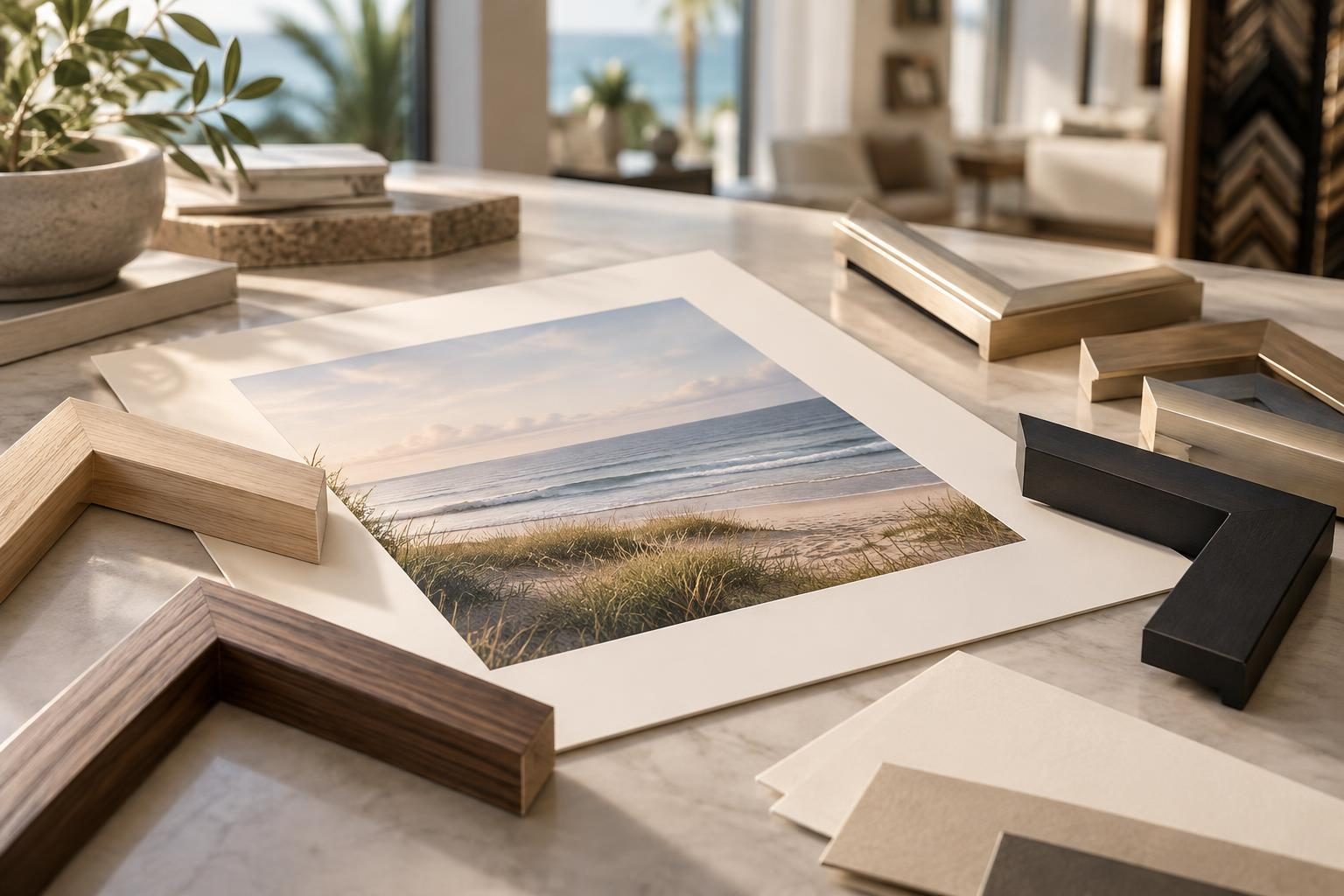
A frame is the quiet architecture around an image. It establishes a boundary, gives the work a presence on the wall, and influences how its colors and details are perceived. The most considered choice does not simply match the furniture; it makes the artwork feel resolved.
For buyers exploring Picture Frames & Mouldings at Easy Signs Inc., the useful starting point is not a particular finish. It is a clear understanding of the piece, its destination, and the role it should play in the room.
Begin With the Artwork, Not the Room
Before considering mouldings, spend a moment with the image itself. Is it delicate or graphic? Spacious or densely detailed? Does its appeal lie in subtle tonal shifts, vivid color, or the texture of the surface? These qualities provide a more reliable direction than choosing a frame solely because it coordinates with a nearby table.
A restrained photograph may benefit from a quiet border that leaves its atmosphere undisturbed. A bold composition may invite a more assertive surround. Neither is a rule: contrast can be compelling, provided it feels intentional rather than accidental.
Consider the edges, too. A signature, irregular paper edge, or important detail close to the perimeter can affect how the work should be presented. Decide what must remain visible before settling on the proportions of the frame and any surrounding mat.
If the image has not yet been printed, consider the print and frame together. Exploring Photo Paper Printing can be part of that planning process; the intended display should help inform decisions about the final piece.
Understand Scale, Profile, and Visual Weight
Moulding is the shaped material that forms the frame’s border. Its face width is what you see around the image from the front; its profile describes the contour and depth that give that border dimension. Two frames of similar width can create very different impressions because their shapes catch light differently.
A narrow, simple profile often reads as understated. A deeper or more sculptural profile introduces shadow and a stronger architectural presence. The question is not which looks more luxurious in isolation, but which gives the artwork the right amount of emphasis.
Avoid assuming that small artwork always needs a thin frame. A modest piece with a generous surrounding border can feel deliberate and intimate. Equally, a large image may already have enough presence to suit a visually restrained treatment. Proportion is a relationship, not a formula.
Think beyond the image dimensions. The finished outer size, including any mat and moulding, determines how the piece will occupy the wall. Measure the intended space and consider nearby furniture, switches, and adjacent artwork before making a final decision.
Choose a Finish That Creates a Conversation
A frame finish can echo the artwork, connect it to the interior, or create a deliberate pause between the two. Start by looking for undertones rather than exact color matches. Warm browns, cool grays, soft whites, and deep blacks can each shift the apparent mood of an image.
Natural-looking wood tones can introduce warmth and visible texture. Dark finishes can establish a crisp boundary, while lighter finishes may keep the composition feeling open. Metallic finishes can add brightness or contrast, depending on their tone and sheen. Treat these as visual directions to explore, not assumptions about what is available.
For a useful comparison, narrow your choices to three approaches:
- Echo: repeat a secondary tone or texture within the artwork.
- Balance: counter a busy image with a quieter surround.
- Contrast: use a distinct border to give the work definition.
View possible finishes alongside the actual artwork whenever practical. A sample that looks appealing on its own may become too prominent beside a delicate image. Ask which mouldings are available, then judge the relationship at close range and from a few steps away.
Look Beyond Appearance to the Complete Presentation
A beautiful border is only one part of a framing decision. The artwork’s material, thickness, condition, and intended setting also matter. Ask how a proposed arrangement would accommodate the piece, and what mounting, matting, or glazing choices would be appropriate. These are questions to resolve before selecting on appearance alone.
For works on paper, a mat can provide visual breathing room and influence the balance between image and frame. If preservation is a priority, ask specifically about materials that will touch the artwork and whether the proposed presentation suits its long-term care. Do not assume that every framing arrangement offers the same protection.
The print format also changes the conversation. If you are deciding between paper and Photo To Canvas, discuss how each would be displayed rather than expecting one framing approach to suit both.
Finally, consider the location. Strong light, reflected windows, and moisture deserve attention when planning any art display, particularly in South Florida. Describe the wall and its surroundings so that practical concerns remain part of the discussion, not an afterthought.
Make the Final Choice in Context
Before committing, gather the information that makes a comparison meaningful: the artwork or an accurate reference, its dimensions, a photograph of the intended wall, and measurements of the available space. A room photograph helps communicate context, though it should not replace seeing colors and finishes in person.
For a group of pictures, decide what should unify them. It might be a shared finish, a consistent mat treatment, or a similar visual weight. Identical frames are not the only route to cohesion; a clear relationship can be more interesting than strict repetition.
Choose the option that lets your eye return naturally to the artwork. Browse the full frame collection at the Easy Signs Fort Lauderdale frame shop, and use that comparison to refine your direction.
Visit the Easy Signs Inc. showroom at 4860 N. Dixie Hwy, Oakland Park, FL 33334, or contact us to discuss your project. Call (954) 495-4344 or email support@easysignsinc.com.
Keep your ideas growing
More from the journal.

November 4, 2026
Giclee Printing: What Makes a Fine Art Print Archival
What makes a giclee print archival: pigment inks, colour depth and fine art papers, explained by Easy Signs Inc. in Oakland Park, Florida.
Read story
November 4, 2026
Custom Wall Art: Choosing a Material That Suits Your Room
Canvas, acrylic, aluminum, wood or paper: how to choose custom wall art that suits your room, your light and the way you live.
Read story
November 3, 2026
Custom Picture Framing: How to Frame a Print Properly
Mat, glazing, backing and hanging: what actually goes into custom picture framing, and how to get a print framed to last.
Read story